The Beatrix Potter 50p series looks easy to collect at first. It is not. A proper Beatrix Potter 50p collection list starts with one simple question: what exactly counts as the full set, and what should stay outside it?
What Counts as the Full Series
This is the first decision. If you skip it, the set gets messy fast.
For most collectors, the full Beatrix Potter 50p series means the 13 circulating coins from three years. That is the version most people should build first.
| Set Type | What It Includes |
| Circulation Set | 13 Coins From 2016 To 2018 |
| Expanded Set | 13 Circulating Coins Plus 2019 And 2020 Peter Rabbit |
| Premium Set | Circulating Coins In BU Or Proof Format |
That distinction matters. A collector who wants the full circulation run does not need to chase every later Peter Rabbit product. A collector who wants the wider Beatrix Potter theme may decide to add those pieces later.
The Full 13-Coin Circulating List
The easiest way to understand the set is by year.
2016 Coins
- Beatrix Potter
- Peter Rabbit
- Jemima Puddle-Duck
- Mrs Tiggy-Winkle
- Squirrel Nutkin
2017 Coins
- Peter Rabbit
- Tom Kitten
- Mr Jeremy Fisher
- Benjamin Bunny
2018 Coins
- Peter Rabbit
- Flopsy Bunny
- Mrs Tittlemouse
- The Tailor Of Gloucester
That is the full circulation series. It is complete at 13 coins. The repeated Peter Rabbit design across different years is one reason the set confuses new collectors. The name repeats, but the year still matters.
Start by Choosing the Right Set Goal
Many collectors make the same mistake. They buy whatever Beatrix Potter 50p appears first, then decide later what the set should be. That usually leads to duplicates, uneven quality, and money spent in the wrong places.
A better approach is to choose the target first.
You can build the set in a few sensible ways:
- A circulated working set
- A cleaner upgraded circulated set
- A BU set
- A full 13-coin run plus later Peter Rabbit extras
- A mixed set with circulation coins and selected presentation pieces
None of these is wrong. The important part is choosing one before you start buying seriously.
A circulated set is the most practical entry point. It gives you the full series at a lower cost and makes it easier to learn the designs, the dates, and the relative difficulty of the coins. A BU set looks sharper and more uniform, but it costs more and usually makes more sense once the collector already knows the series.
Build the Set in a Smart Order
Do not start with the hardest coin just because it gets the most attention. That can drain the budget too early and make the rest of the set feel expensive.
A better order looks like this:
- Start with the easiest coins
- Add the mid-range pieces next
- Leave the scarcer circulation coins until later
- Decide after that whether the 2019 and 2020 Peter Rabbit coins belong in your set
- Think about BU upgrades only after the base set is under control
That order works because it gives the collection shape early. Once the common and mid-level coins are in place, the missing pieces become easier to track. You also stop guessing what a “good price” looks like because you already know the rest of the set.
Which Coins Are Usually Easier to Find
Every Beatrix Potter 50p collector learns the same thing quite quickly. Not all 13 coins feel equally available.
Benjamin Bunny is usually the easiest. It has the highest mintage in the whole series and often works as the entry coin for new collectors. The 2016 Peter Rabbit is also widely seen. Other pieces from 2016 can still be affordable if the condition is ordinary and the buyer is patient.
| Easier Early Targets | Why They Help |
| Benjamin Bunny | Common And Good For Starting The Set |
| 2016 Peter Rabbit | Familiar Design And Usually Affordable |
| Tom Kitten | Often Easier Than The Scarcer Late Coins |
These coins matter because they give the set momentum. A collection feels real once several spaces are filled. That is more useful than spending too much on one scarce coin at the start.
Which Coins Usually Need More Patience
The harder end of the set tends to come from two things working together: lower mintage and stronger collector demand. Those are not the same factor, but they often point in the same direction.
The names most collectors watch more closely are:
- Jemima Puddle-Duck
- Flopsy Bunny
- 2018 Peter Rabbit
- Mrs Tittlemouse
These are the coins that often slow the set down. That does not mean they are impossible. It means the buyer should be more selective about price and condition. Many collectors overpay here because the missing space in the set starts to feel urgent.
That is the wrong moment to rush.
Why Peter Rabbit Needs a Separate Section
Peter Rabbit appears several times in the Beatrix Potter 50p world, and this is where confusion usually starts.
Inside the circulating run, Peter Rabbit appears in:
- 2016
- 2017
- 2018
Those three belong in the 13-coin circulation set. The 2019 and 2020 Peter Rabbit coins are different. They are best treated as later collector extensions, not part of the core circulating series.
This matters because many online listings blur the line. A seller may group all Peter Rabbit 50ps together and make the set look either larger or more complicated than it really is. The fix is simple: treat the 13 circulation coins as the base set, then decide later if the two later Peter Rabbit issues matter to you.
Mintage, Popularity, and Price Are Not the Same
This is one of the most useful rules in the whole series.
A coin can be scarce and still not lead every price list. A coin can be popular and still be easier to find than people think. A famous character can carry demand that goes beyond mintage.
| Factor | What It Really Means |
| Mintage | How Many Coins Entered Circulation |
| Popularity | How Much Collectors Want The Character |
| Price | What Buyers Are Paying Right Now |
That table explains why the series can look inconsistent to beginners. A lower-mintage coin may deserve more attention, but the final price still depends on how many people want it and how clean the available examples look.
Circulated Set or BU Set
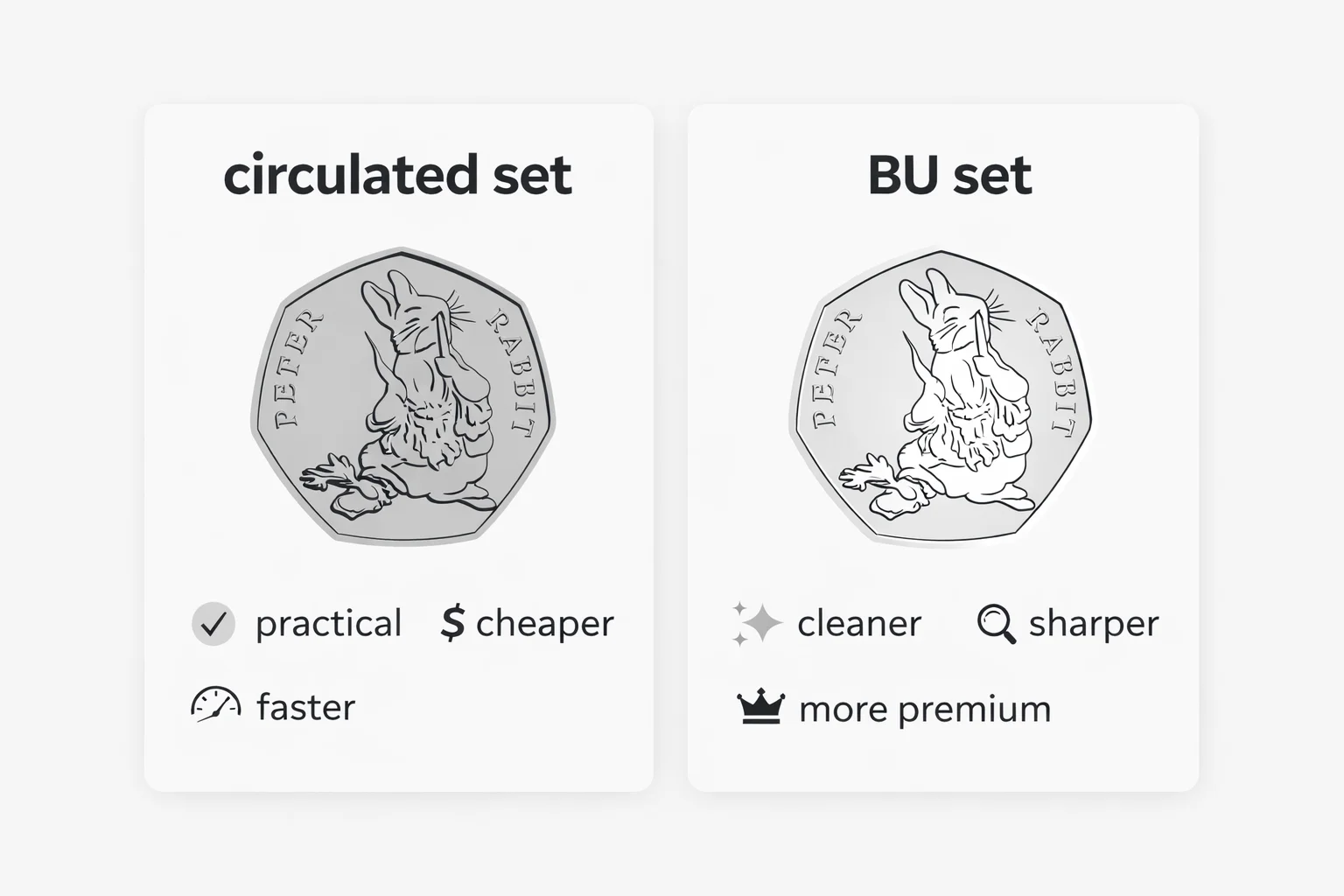
This is the next practical choice. A circulated set is cheaper, faster, and more flexible. It also feels closer to the real story of the series, since these coins were made for circulation in the first place.
A BU set gives you cleaner surfaces, better consistency, and sharper presentation. It also changes the project. You are no longer just building the full series. You are building a cleaner, more premium version of it.
Both approaches are valid.
A good collector strategy is often this:
- Finish the circulated set first
- Learn the difficult coins
- Upgrade later only where it makes sense
That way, you do not pay BU money for coins you may decide to replace again later.
What to Check Before Buying a Single Coin
Single-coin buying is where a lot of waste happens. This is especially true once the collector only needs three or four missing pieces.
Before paying for a coin, check:
- The correct year
- The correct character
- The condition
- Whether it is circulated or BU
- Whether it belongs to the 13-coin run or to a later extension
- Whether the asking price makes sense for that role in the set
This is where you can rely on the coin appraisal app. As a fast price screen before you pay too much for one missing coin, because the listing looks tidy or the character is popular.
That is useful with this series because the market often shifts from “common set piece” to “wanted missing coin” once the collector is near the end.
A Better Way to Avoid Overspending
A lot of Beatrix Potter 50p buying goes wrong because the collector starts chasing the rarest names too soon. Another mistake is paying collector-premium prices for average circulated coins when cleaner pieces are still easy to find.
A more disciplined approach is simple:
- Buy the common coins first
- Compare singles against part-sets
- Leave the scarcer pieces until you know the series better
- Do not mix the core set with later Peter Rabbit issues unless that is your plan
- Upgrade only after the 13-coin run is finished
That method keeps the budget under control and stops the set from turning into a random pile of duplicates and half-decided add-ons.
Why a Year-by-Year Build Often Works Best
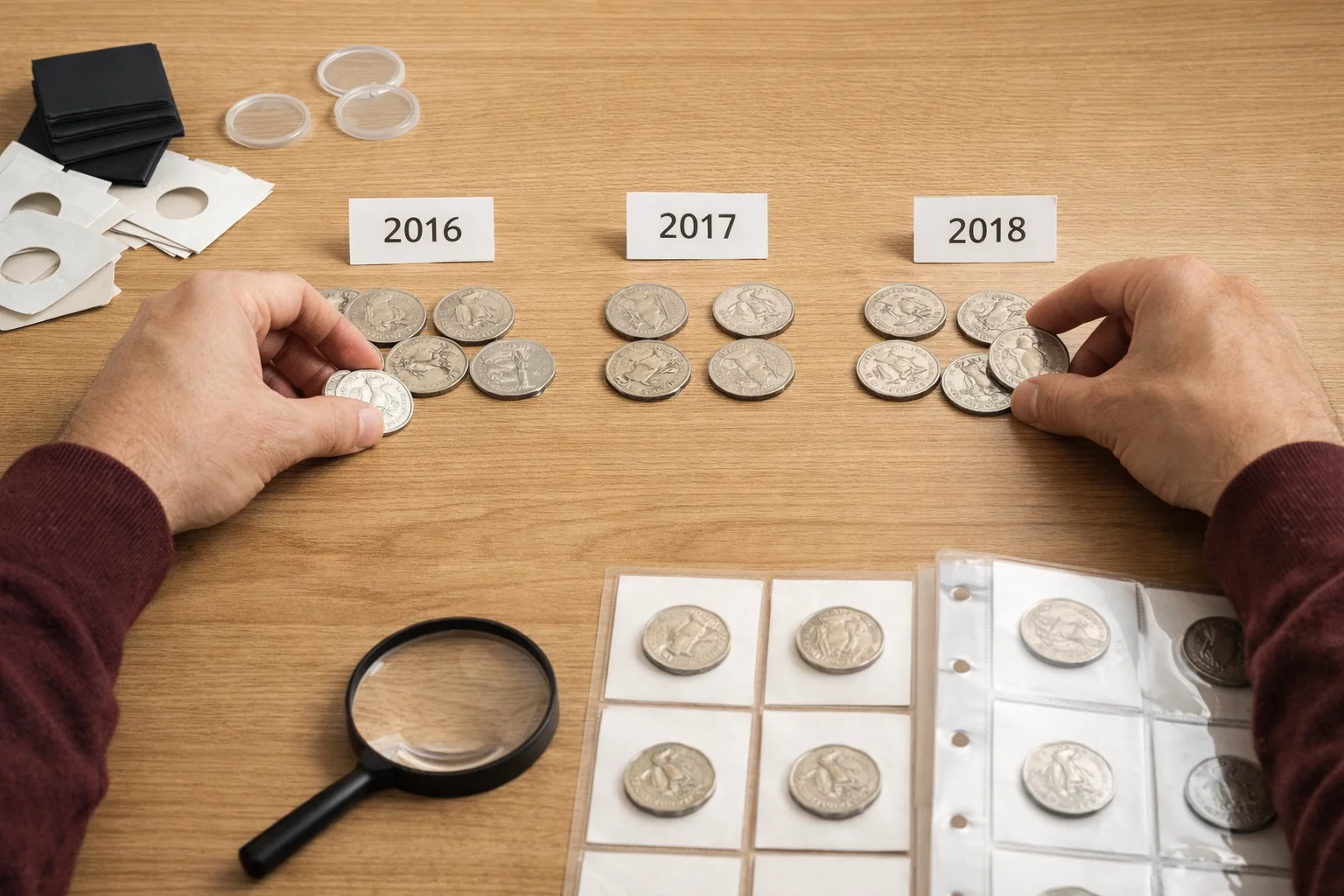
Some collectors build by rarity. Others are built by their favorite characters. Both approaches can work, but for this series, a year-by-year method is often cleaner.
Finish 2016 first. Then 2017. Then 2018. After that, decide if you want the two later Peter Rabbit coins. This approach keeps repeated names under control and makes the collection easier to track.
It also makes the missing gaps more obvious. That sounds small, but it matters. A set feels more manageable when the collector can see exactly what year is complete and what year still needs work.
Full Set First, Key Coins Second
This series works especially well as a full run. Some collections are built around one key date. Beatrix Potter 50p collecting usually feels better when the set comes together as a whole.
The reason is simple. The series is driven by characters, design continuity, and completion. A collector may love the lowest-mintage coin, but the set usually becomes more satisfying once all 13 pieces are in place.
That is why the practical goal should stay clear: complete the run first, then refine it.
Conclusion
A full Beatrix Potter 50p set is easier to build once the target is defined early. For most collectors, the cleanest answer is the 13 circulating coins from 2016 to 2018. That is the true core of the series. The later Peter Rabbit issues work better as optional extras, not as part of the main run.A free coin app – Coin ID Scanner works well here because its smart filters and AI helper make it easier to separate the exact year-and-character combinations, keep duplicates under control, and track what still belongs on the list. The smartest build is still the simplest one: know the target, buy in order, and let the full series take shape one clear step at a time.